Anthropic Claude Tag: Turning Slack Channels into a Resident AI Teammate’s Workspace
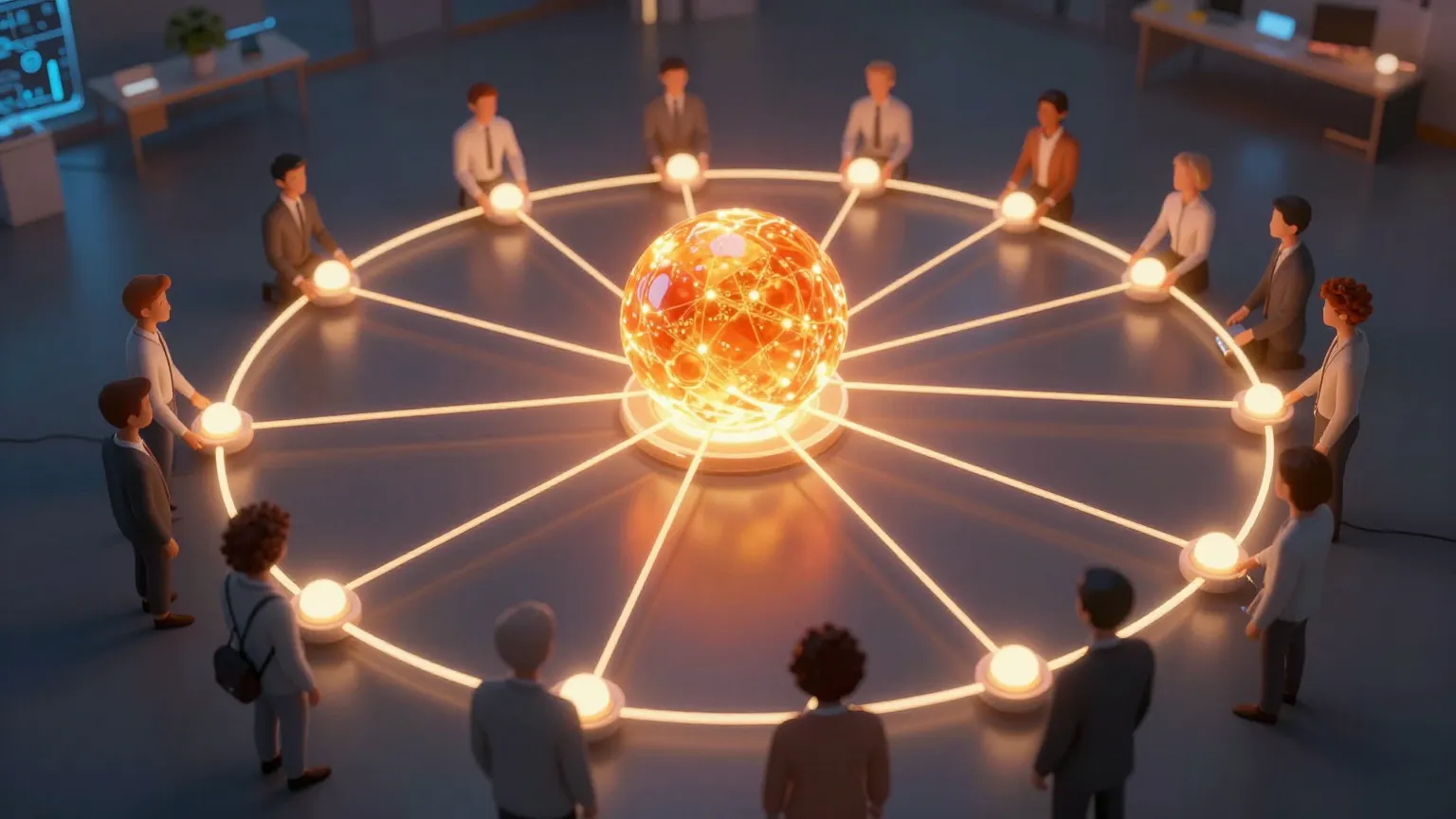
An image depicting the multiplayer structure in which a single Claude works with everyone in a channel.
Overview
The competitive arena for enterprise AI is shifting from standalone chatbots to the collaboration layer. People do their real work not in one-on-one chat windows but in shared team channels, and for AI to be a genuine colleague it needs to live inside those channels. On June 23, 2026, Anthropic made its most aggressive move in that direction.
Anthropic announced Claude Tag, a replacement for the existing Claude in Slack app. It is a shared AI agent embedded directly inside Salesforce’s Slack, available to Claude Enterprise and Team customers as a beta and research preview. Built on the recently released Claude Opus 4.8 model, it lets anyone in a channel type @Claude to delegate async work such as writing pull requests, extracting sales metrics, and running data analysis.
This post reads Claude Tag from the perspective of agent architecture rather than stock prices or marketing copy. We examine what sets it apart from existing chatbot integrations, what multiplayer and ambient operation change in practice, and what it means for ThakiCloud as a company building a K8s-based multi-tenant agent platform.
What Happened
The announcement has four key dimensions.
First, from a standalone chatbot to a multiplayer teammate. Prior integrations used a per-user model where each person got a separate AI instance. Claude Tag puts a single Claude inside a Slack channel that interacts with everyone in it. Anyone can see what Claude is working on, and a teammate can pick up a conversation where the previous person left off.
Second, ambient operation. Claude Tag does not just wait to be asked. With ambient mode enabled, it proactively surfaces relevant information from the channels it monitors and the connected tools, and follows up autonomously on threads and tasks that have gone quiet without resolution.
Third, learning over time. It follows channels and accumulates context about the work happening inside them. Users no longer need to re-explain a project from scratch. The channel itself becomes the agent’s long-term memory.
Fourth, enterprise tool access with scoped data control. Claude Tag can access connected enterprise tools while keeping data access governed by scopes. Because it is an agent that operates real business tools beyond simple message replies, permission boundaries are a first-class product feature.
Anthropic has noted that roughly 65% of its own product team’s code is now generated by an internal version of Claude Tag, and that the same pattern is spreading to data analysis and support-ticket resolution.
How It Works
The following diagram captures Claude Tag from an operational standpoint.
flowchart TB
    subgraph CH["Slack Channel (Single Shared Claude)"]
        U1["Team Member A"] -->|@Claude delegation| C["Claude Tag (Opus 4.8)"]
        U2["Team Member B"] -->|hand-off| C
        U3["Team Member C"] -.->|observe| C
    end
    C -->|ambient monitoring| MEM["Accumulated Channel Context (Long-term Memory)"]
    C -->|scoped permissions| TOOLS["Enterprise Tools\nGitHub · Data · Sales Systems"]
    C -->|proactive follow-up| TASK["Stalled Threads · Unresolved Work"]
    MEM --> C
The critical point in this diagram is that Claude holds the shared state of the channel as a single entity. Unlike individual chatbots that each maintain separate conversational context, Claude Tag consolidates the entire channel’s workflow into one context. That is why one person can pick up work started by another. At the same time, this unified context combines with scoped permissions for enterprise tools to complete an agent loop of “observe + remember + take initiative + execute tools” inside the collaboration space.
Why This Matters
Slack is increasingly becoming the main battleground for enterprise AI. Salesforce added 30 agent capabilities to Slackbot in March, and OpenAI unveiled Workspace Agents in April. Gartner projects that by the end of 2026, 40% of enterprise applications will incorporate task-specific AI agents. Claude Tag is effectively Anthropic’s declaration that it intends to claim the collaboration layer directly.
The capital to back up that ambition is also in place. Anthropic recently raised a Series H at a $96.5 billion post-money valuation, and annualized run-rate revenue has surpassed $4.7 billion [estimated]. Developer tooling, specifically Claude Code, accounts for more than $250 million of that. Claude Tag, then, represents the company throwing its full weight behind the thesis of taking AI out of chat windows and embedding it as a permanent resident inside team workflows. Anthropic has indicated it plans to expand Claude Tag to Microsoft Teams, email, and other project-management tools within the next few weeks.
ThakiCloud Perspective: A Mirror for a Multi-Tenant Agent Platform
ThakiCloud is building an AI/ML SaaS platform that operates multi-tenant agents on Kubernetes. Claude Tag surfaces, in commercial-product form, precisely the problems we need to solve. Three observations stand out.
First, operating shared state and long-term memory. The design of a single agent per channel holding accumulated context maps directly to the problem of isolating and persisting per-tenant agent memory in a multi-tenant environment. Who can access that memory, whether context survives personnel changes, and whether memory stays within tenant boundaries are all platform-level design decisions. Claude Tag is an example of bringing those decisions to the surface of the product.
Second, scoped permissions are the foundation of trust. The moment an agent operates enterprise tools directly, what it cannot do matters more than what it can do. This is also why ThakiCloud emphasizes on-premises deployment, domestic regions, and self-hosting. The core competitive advantage is letting customers benefit from an agent’s proactivity without losing control over institutional data. For organizations uncomfortable with permanently delegating institutional memory to a single vendor’s cloud agent, an isolated self-operated agent platform is a clear alternative.
Third, controlling the cost of ambient operation. Ambient monitoring is powerful, but it dramatically changes the token-consumption and billing profile. To offer ambient agents in a multi-tenant platform, a continuous loop that sets per-tenant proactivity levels and budget caps, and measures actual costs in real time, is essential. ThakiCloud’s experience combining Kueue-based GPU scheduling with cost measurement is precisely where that differentiation lies. The goal is not just toggling ambient agents on and off, but treating “how proactive to be” as an operationally manageable variable tied to cost.
Limitations and Counterarguments
Claude Tag is not an immediate answer for every organization. Enterprise technology leaders should weigh several risks before adopting it.
Most immediately, persistent async monitoring can dramatically change token consumption and billing structures. An always-on agent incurs cost even when users have not explicitly invoked it, which is a burden for organizations that want predictable billing.
Second, permanently delegating institutional memory to a single-vendor AI significantly increases platform lock-in and vendor dependence. The moment channel context becomes an asset, the risk of that asset being tied to a specific vendor’s infrastructure comes along with it.
Third, there is the balance between proactivity and control. Automatically pulling in information and following up on outstanding items is convenient, but flawed context judgments or excessive intervention can disrupt collaboration. Even where scoped data control is available, how an organization actually configures and audits permission boundaries determines safety in practice. Finally, the beta and research-preview status is worth remembering. Stated capabilities and figures like 65% represent Anthropic’s own internal environment, and there is no guarantee they will reproduce identically across general organizational workloads.