Kimi K2.6: 1T MoE, 32B Active, 300-Subagent Swarm Architecture Analysis
⏱️ Estimated reading time: 8 min
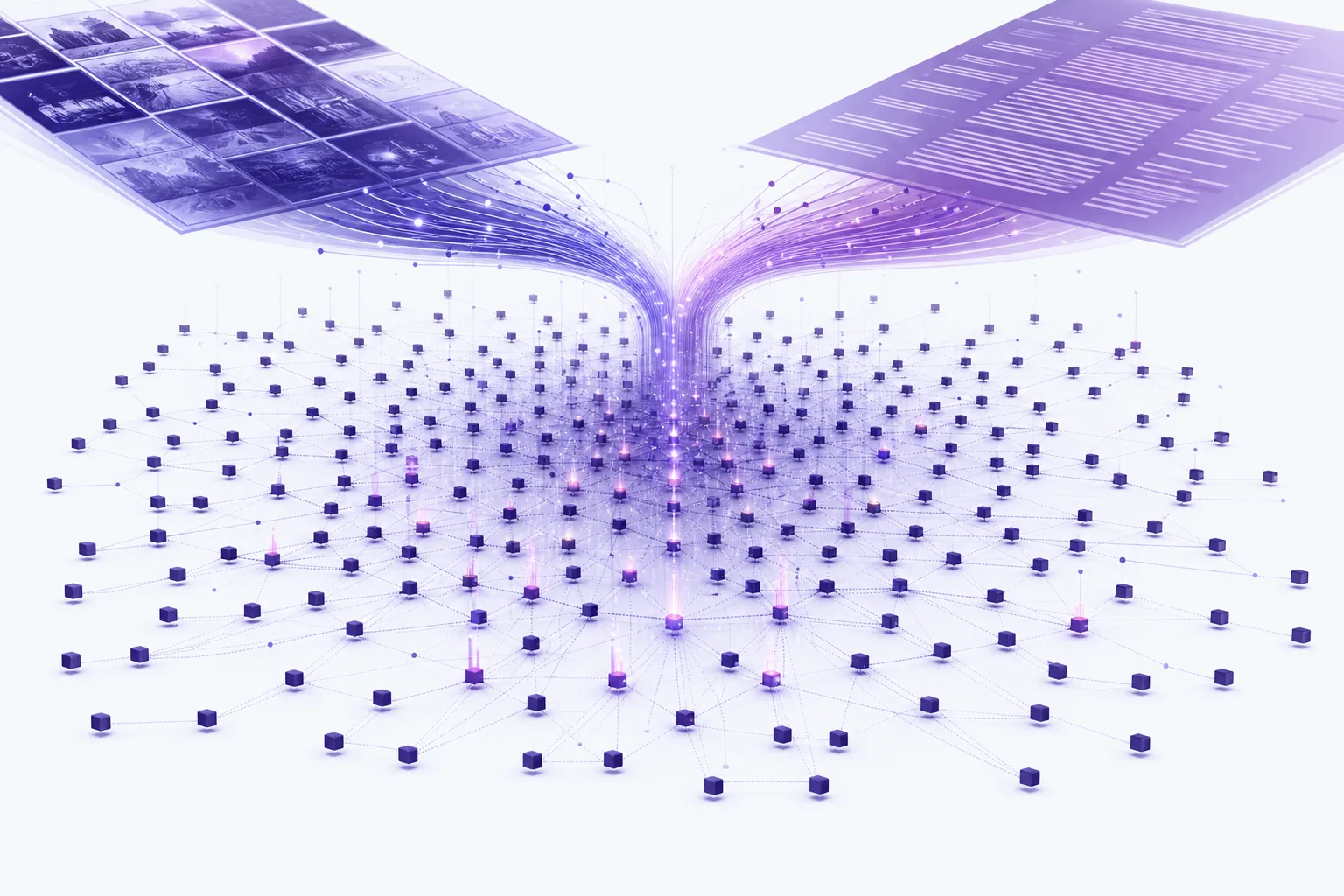
Kimi K2.6 Overview
Kimi K2.6, released by Moonshot AI, is available at the moonshotai/Kimi-K2.6 repository under a Modified MIT license. Total parameter count is 1 trillion (1T), but only 32B parameters are active during inference.
The practical significance of this 3.2% activation rate is straightforward. Loading all weights onto GPU memory requires the full 1T, but the FLOPs needed to process a single token are comparable to a dense 32B model. Storage requirements and inference speed are effectively decoupled.
Architecture Details
Layer Configuration
Kimi K2.6 has 61 layers. The first layer is a dense layer; the remaining layers are MoE layers. There are 384 experts in total, with 8 selected per token. One shared expert is also always active in addition to the selected 8.
The attention mechanism is MLA (Multi-head Latent Attention), first introduced in DeepSeek V2. MLA compresses Key-Value caches into a low-dimensional latent space, reducing KV cache memory. Attention hidden dim is 7168, MoE hidden dim is 2048, and the number of attention heads is 64. The activation function is SwiGLU.
Context and Vocabulary
Context length is 256K tokens. Vocabulary size is 160K, which is well-suited for multilingual processing.
Vision Encoder
A MoonViT 400M vision encoder is included for multimodal processing. It handles both image and video inputs.
Thinking and Instant Modes
The model can switch between a Thinking (reasoning) mode and an Instant mode. In Thinking mode, intermediate reasoning steps are interleaved with the output. Users can choose the tradeoff between compute cost and response quality.
Agent Swarm
The model card states the model can operate 300 subagents simultaneously and handle up to 4,000 coordination steps. This is designed for distributing complex long-horizon tasks such as coding across many agents working in parallel.
Benchmarks
Numbers from the HF model card:
| Benchmark | Kimi K2.6 |
|---|---|
| SWE-Bench Verified | 80.2 |
| SWE-Bench Pro | 58.6 |
| SWE-Bench Multilingual | 76.7 |
| Terminal-Bench 2.0 | 66.7 |
| LiveCodeBench v6 | 89.6 |
| AIME 2026 | 96.4 |
| GPQA-Diamond | 90.5 |
| HMMT 2026 | 92.7 |
| MMMU-Pro | 79.4 |
| MathVision | 87.4 |
| BrowseComp | 83.2 |
| HLE-Full w/tools | 54.0 |
SWE-Bench Verified at 80.2 is strong for real GitHub issue resolution tasks. AIME 2026 at 96.4 shows performance on competition-level mathematics. MMMU-Pro 79.4 and MathVision 87.4 demonstrate multimodal reasoning capability.
BrowseComp at 83.2 measures web-based information retrieval, a meaningful indicator when the model is used in agent pipelines.
Serving and Deployment
Supported Frameworks
- vLLM (tensor parallelism support)
- SGLang (batch inference optimization)
- KTransformers (quantized serving on consumer-grade GPUs)
- Transformers 4.57.1 or later, below 5 (note: there is a version ceiling)
Quantization
39 quantization variants are available, including native INT4. Compatible formats for llama.cpp, Ollama, LM Studio, and Jan are provided.
Requirements
Loading 1T parameters in BF16 requires approximately 2 TB of VRAM. For actual serving, even with INT4 quantization, approximately 8 H100 80GB GPUs are needed. KTransformers allows quantized variants to be served on consumer-grade GPU clusters.
The Transformers version constraint (>=4.57.1,<5) must be confirmed when setting up the environment.
ThakiCloud Perspective
Two aspects are particularly interesting here.
Serving efficiency from 1T total / 32B active. Active parameters at 32B level means inference latency and throughput effectively behave like a dense 32B model. Loading all weights onto GPU (VRAM cost) and token generation speed (FLOPs) are decoupled. The claim that serving is possible with a footprint of 1 to 2 H100 GPUs assumes quantization, but compared to dense 70B+ models, throughput is favorable. This distinction matters when calculating actual serving costs in environments where GPU quotas are managed via Kueue.
300-subagent swarm and K8s multi-tenant connections. Kimi K2.6’s claimed ability to run 300 subagents simultaneously maps naturally onto an architecture that schedules agent pods on Kubernetes. You can picture each subagent as an independent workload scheduled by Kueue with assigned priorities. How the model actually implements this level of agent coordination requires reviewing the repository code and examples directly, but it provides a useful reference architecture for teams building multi-tenant agent demos.
With 39 quantization variants and KTransformers support, functional verification can start with RTX-class GPUs rather than a full H100 cluster. The fine print of the Modified MIT license should be read directly and verified against your intended use case before deployment.